
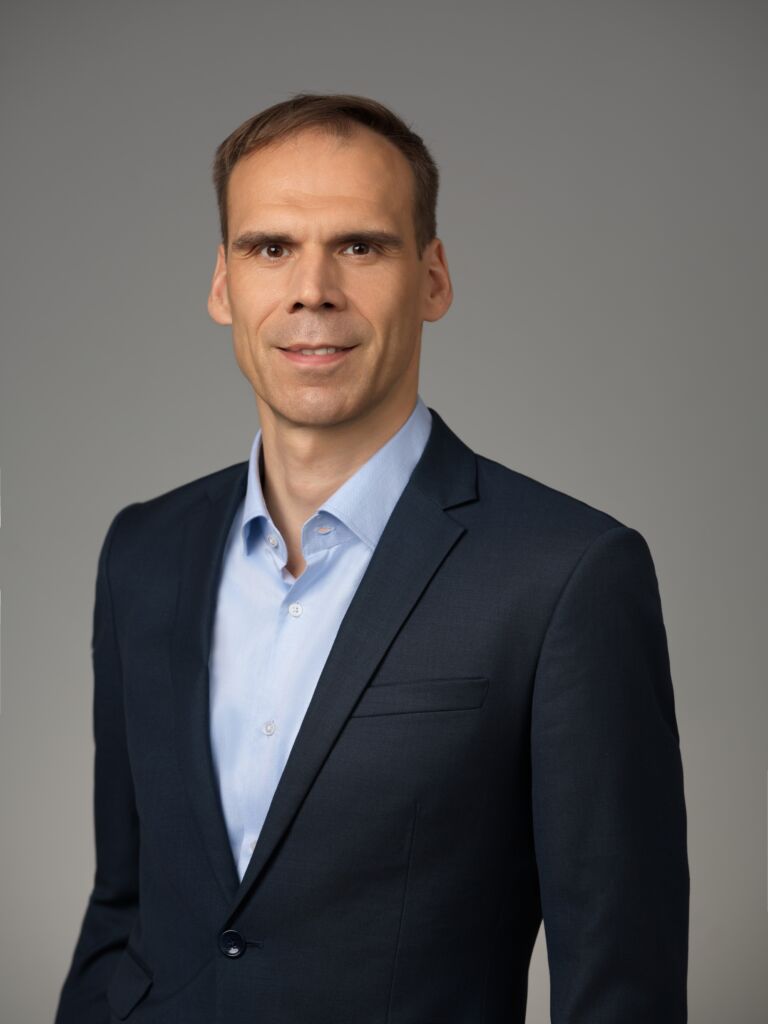
Prof. Benjamin BECKER
Professor
EDUCATION
- Ph.D. University of Duesseldorf (Germany) 2010
- M.S. University of Trier (Germany) 2005
- B.S. University of Trier (Germany) 2001
RESEARCH INTERESTS
The MIND & AI Lab drives innovation at the intersection of cognitive neuroscience and artificial intelligence to advance mental health and social-cognitive and affective sciences. Leveraging recent technological and computational progress, we investigate the neural and behavioral dynamics of social-cognitive and affective processes in humans, focusing on how these processes (1) shape and are shaped by interactions with emerging technologies and new forms of intelligence (such as social media and AI), (2) become dysregulated in mental disorders (including anxiety, depression, and addiction), and (3) can be optimized through neuropeptides (e.g., oxytocin, renin–angiotensin) or brain-inspired technologies (e.g., non-invasive brain stimulation and real-time neurofeedback).
Our international team employs a comprehensive array of methodologies – from neuropsychology and cognitive neuroscience to experimental psychology, advanced neuroimaging, AI, machine learning-based neural decoding, computational modeling, and both pharmacological and real-time fMRI-guided neuromodulation – in healthy and clinical populations. Our findings have been reported in more than 380 publications across leading scientific journals and successfully translated into randomized clinical trials, paving the way for innovative mental health interventions and policy development.
Benjamin Becker has received several awards for his scientific work, including e.g. the International Excellent Young Scientists award (NSFC) and the Humanities and Social Sciences Prestigious Fellowship (RGC), and his work has been supported by competitive national and international grants. He serves as founding Editor-in-Chief of COG (AAAS, Science Partner Journal), Principal Editor of Psychopharmacology (Springer), Executive Board Member of Advanced Science (Wiley), Editor of Psychotherapy and Psychosomatics (Karger), and Scientific Editor at PLOS Biology (PLOS), among other roles. He is also founding co-lead of the CIBD Task Force of the Global Brain Consortium (GBC) and the Strategic Research Topic AI, Society & Social Dynamics. Benjamin Becker has been recognized in consecutive years among the world’s top 1% and top 2% of scientists by Clarivate and Stanford, respectively.
ACADEMIC JOURNAL EDITORIAL SERVICES
- COG (Editor in Chief)
- Psychopharmacology (Principal Editor)
- PNAS (Direct Submissions Editor)
- Advanced Science (Executive Editorial Board)
- Psychotherapy and Psychosomatics (Board Member)
- PLOS Biology (Scientific Editor)
- Neuroscience and Biobehavioral Reviews (SI Editor)
- Psychoradiology (Board Member)
KEY PUBLICATIONS
Qiu N, Xu D, Sahakian BJ, Langley C, Eils R, Marciano L, Montag C, Halpern J, Yeo BTT, Yip P, Yao D, Becker B (2026). The future of artificial intelligence and emerging technologies in mental health: prospects, challenges, and a roadmap for personalized treatment. Psychotherapy and Psychosomatics, DOI: 10.1159/pps/aemag015
Jiang H, He J, Zimmermann K, Zhou X, Gan X , Ferraro S, Wang L, Zhou B, Kendrick KM, Zhao W, Yao D, Yuan T, Feng Z, Becker B (2026) Common and distinct neurofunctional signatures of dynamic naturalistic emotion regulation strategies. Nature Communications 17: 4272
Han M, Dong W, Fu K, Wang J, Xu Y, Zheng Y, Kendrick K, Ferraro S, Xu T, Yao D, Becker B (2026) Vasopressin and angiotensin II pathways differentially modulate human fear response dynamics to looming threats. PLOS Biology 24:e3003668
Becker B (2025) Will our social brain inherently shape – and be shaped by – interactions with AI? Neuron 113: 2037-2041
Montag C, Spape M, Becker B (2025) Challenges and opportunities of AI solutions to loneliness. Trends in Cognitive Sciences 29: 869-871
Fu K, Xu S, Zhang Z, Liu D, Zhang Y, Zhou F, Zhang X, Lan C, Wang J, Wang L, He J, Kendrick K, Biswal B, Liang Z, Zhao W, Becker B (2025) Oxytocin reduces subjective fear in naturalistic social contexts via enhancing top-down middle cingulate-amygdala regulation and brain-wide connectivity. Advanced Science (12:e03251)
Ran Z, Gan X, Xu T, Yu F, Lan W, Song X, Jiao G, Liu X, Zhou F, Becker B (2025) A neurofunctional signature of affective arousal generalizes across valence domains and distinguishes subjective experience from autonomic reactivity. Nature Communications 16: 6492
Zhou F, Zhang R, Yao S, Dong D, Feng P, Kranz G, Feng T, Becker B (2025) Capturing dynamic fear experiences in naturalistic contexts: An ecologically valid fMRI signature integrating brain activation and connectivity. IEEE Transactions on Affective Computing 17:1
Xu T, Fu K, Ma C, Yao D, Becker B (2025) Renin-angiotensin system: a novel target for brain health. Trends in Molecular Medicine 32: 429-445
Gan X, Zhou F, Xu T, Liu X, Zhang R, Zheng Z, Yang X, Zhou X, Yu F, Li J, Cui R, Wang L, Yuan J, Yao D, Becker B (2024) A neurofunctional signature of subjective core disgust generalizes to oral distaste and socio-moral contexts. Nature Human Behaviour, 8:1383-1402
Montag C, Becker B (2024) Use EU digital act to fund research on social-media harms. Nature 628, 268
Montag C, Schulz PJ, Marciano L, Roman-Urrestarazu A, Rumpf HJ, Becker B (2024) Safeguarding young users on social media through academic oversight. Nature Reviews in Psychology 3, 368-369
Xu T, Chen Z, Zhou X, Wang L, Zhou F, Yao D, Zhou B, Becker B (2024) The central renin angiotensin II system – a genetic pathway, functional decoding and selective target engagement characterization in humans. Proceedings of the National Academy of Sciences of the United States of America (PNAS) 121, e2306936121
Liu X, Jiao G, Zhou F, Kendrick KM, Yao D, Xiang S, Jia T, Zhang X, Zhang J, Feng J, Becker B (2024) A neural signature for the subjective experience of threat anticipation under uncertainty. Nature Communications 15:1544
Montag C, Marciano L, Schulz PJ, Becker B (2023) Unlocking social media’s brain secrets through neuroscience. Trends in Cognitive Sciences, 27:1102-1104
Xu T, Zhou X, Kanen JW, Wan L, Chen Z, Zhang R, Jiao G, Zhou F, Zhao W, Yao S, Becker B (2023) Angiotensin blockade enhances motivational reward learning via enhancing ventral striatal prediction error and frontostriatal communication. Molecular Psychiatry 28: 1692-1702
Kou J, Zhang Y, Zhou F, Gao Z, Yao S, Zhao W, Li H, Lei Y, Gao S, Kendrick KM, Becker B (2022) Anxiolytic effects of chronic oxytocin on neural responses to threat are dose-frequency dependent. Psychotherapy and Psychosomatics 91: 253-264
Zhou F, Zhao W, Qi Z, Geng Y, Yao S, Kendrick KM, Wager TD, Becker B (2021) A distributed fMRI-based neuromarker for the subjective experience of fear. Nature Communications 12:6643
Quintana D, Lischke A, Grace S, Scheele D, Ma Y, Becker B (2021) Advances in the field of oxytocin research: lessons learned and future directions for clinical research. Molecular Psychiatry 26: 80-91.
Xin F, Zhou X, Dong D, Zhao Z, Yang X, Wang Q, Gu Y, Kendrick KM, Chen A, Becker B (2020) Oxytocin differentially modulates amygdala responses during top-down and bottom-up aversive anticipation. Advanced Science 2001077.
Xu X, Dai J, Liu C, Chen Y, Xin F, Zhou F, Zhou X, Huang Y, Wang J, Zou Z, Li J, Ebstein RP, Kendrick KM, Zhou B, Becker B (2020) Common and disorder-specific neurofunctional markers of dysregulated empathic reactivity in major depression and generalized anxiety disorder. Psychotherapy and Psychosomatics 89: 114-116.
Zhou F, Geng Y, Li J, Liu C, Zhao W, Feng T, Guastella A, Ebstein, RP, Kendrick KM, Becker B (2019) Human extinction learning is accelerated by an angiotensin antagonist via ventromedial prefrontal cortex and its connections with basolateral amygdala. Biological Psychiatry 86:910-920.
Zhao Z, Yao S, Li K, Sindermann C, Zhou F, Zhao W, Li J, Luehrs M, Goebel R, Kendrick KM, Becker B (2019) Real-time functional connectivity-based neurofeedback of amygdala-frontal pathways reduces anxiety. Psychotherapy and Psychosomatics 88:5-15.
Li J, Xu L, Zheng X, Fu M, Zhou F, Xu X, Ma X, Li K, Kendrick KM, Becker B (2019) Common and dissociable contributions of alexithymia and autism to domain-specific interoceptive dysregulations – a dimensional approach. Psychotherapy and Psychosomatics 88: 187-189.
Becker B, Wagner D, Koester P, Tittgemeyer M, Mercer-Chalmers-Bender K, Hurlemann R, Zhang J, Gouzoulis-Mayfrank E, Kendrick KM, Daumann J (2015) Smaller amygdala and medial prefrontal cortex predict escalating stimulant use. Brain 138:2074-86.
Becker B, Scheele D, Moessner R, Maier W, Hurlemann R (2013) Deciphering the neural signature of conversion blindness. American Journal of Psychiatry 170:121-122.
PREPRINTS (SELECTION)
Teng Y, Zhing Q, Thordsen KMTN, Montag C, Becker B (2026) Brief chatbot interactions produce lasting changes in human moral values. Arxivs.com, doi: 10.48550/arXiv.2604.21430
Wang J, Gan X, Liu D, He J, Ferraro S, Kendrick KM, Zhao W, Yao S, Montag C, Becker B (2026) Mapping generative AI use in the human brain: divergent neural, academic, and mental health profiles of functional versus socio-emotional AI use. Arxivs.com, doi: 10.48550/arXiv.2604.08594
Wu Y, Gan X, Jiao G, Hurlemann R, Scheele D, Zhou X, Zhang R, Zhou F, Jiang H, Fu K, Wang J, Teng Y, Becker B (2026). A neurofunctional signature of romantic love predicts rewards on social media, effects of oxytocin and drug-cue reactivity. BioRxiv, doi:10.64898/2026.08.10.744060
Xu T, Chen Z, Zhang L, Gan X, Zhou F, Zhang R, Zhao W, Fu K, Wang L, Yao D, Feng T, Becker B (2026). Rapid offline integration of learned experiences is shaped by valence and biases future decisions. Preprint, Research Square, doi:10.21203/rs.3.rs-10900455/v1.
Fu K, Xu S, Liu D, Zhang Z, Liu Q, He J, Xu T, Liu C, Wang J, Zhang Y, Zhou F, Zhang X, Lan C, Han M, Li M, Liang Z, Biswal B, Kendrick KM, Zhao W, Yao D, Becker B (2026). Oxytocin reshapes fear control: Intensity-dependent prefrontal dominance and whole-brain integration during naturalistic viewing. MedRxiv, doi:10.64898/2026.08.11.26360155
For a full publication list see also google scholar https://tinyurl.com/GSbbecker
RESEARCH LABORATORY
MIND & AI Lab (Mental health Innovation, Neuroscience, Decoding emotions & AI Laboratory)
RESEARCH INTERNSHIP OPPORTUNITIES
Contact us for opportunities
 Print
Print